

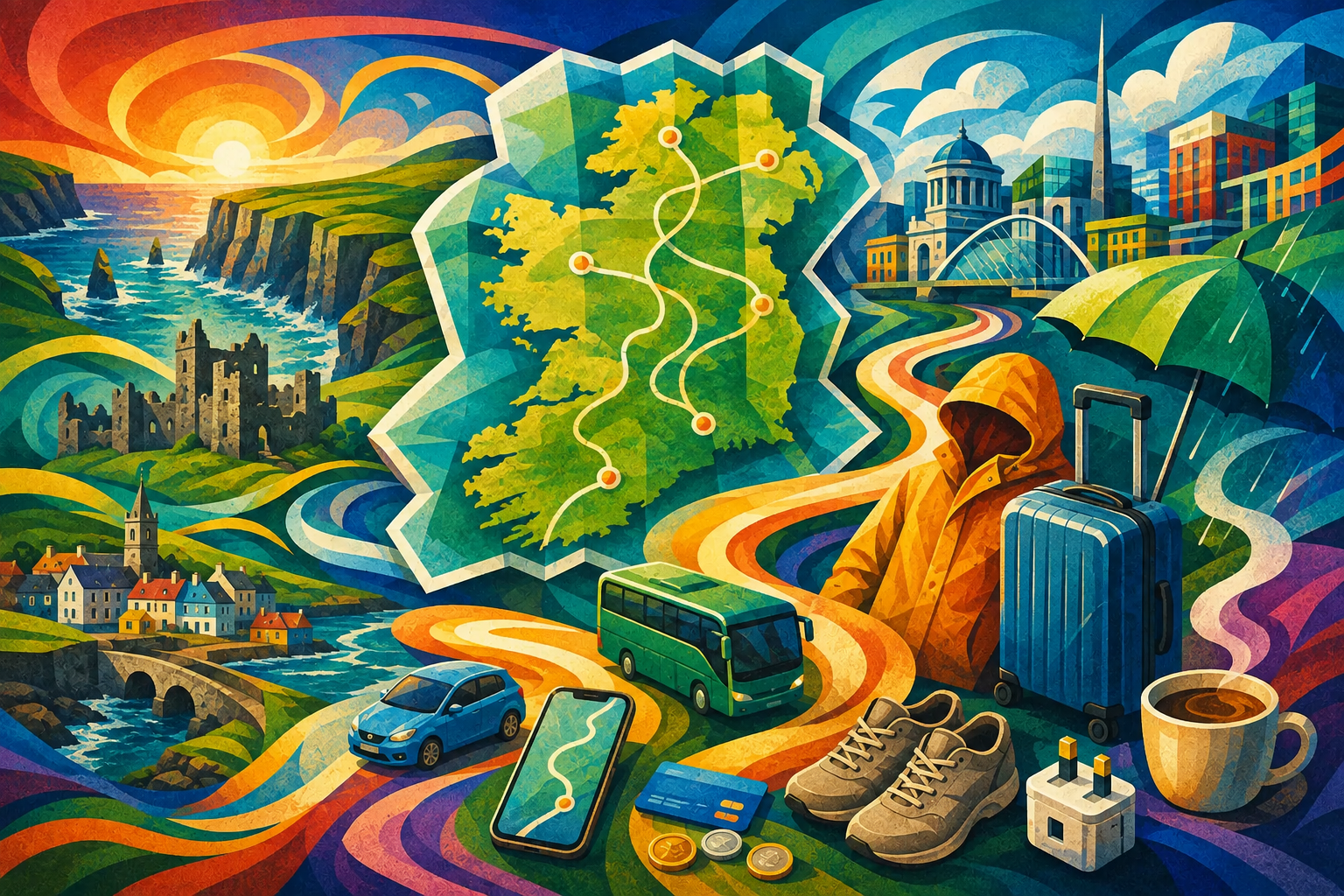
Planning your first trip to Ireland is an exciting step into a country rich in history, dramatic landscapes, and deeply rooted culture.
From rugged coastlines and ancient castles to lively pubs and quiet rural roads, Ireland rewards travellers who arrive prepared and curious. We have created this comprehensive Ireland travel guide for first-time visitors to help you avoid common mistakes, travel smarter, and experience the country authentically.
Whether you are visiting for a long weekend or an extended road trip, these essential Ireland travel tips will help you make the most of every moment.

1. Understand Ireland’s Geography and Travel Pace
Ireland may look small on a map, but travel times often surprise first-time visitors. Narrow country roads, changing weather, and winding coastal routes mean journeys take longer than expected.
Key advice for first-time visitors to Ireland:
- Avoid overpacking your itinerary
- Focus on one region at a time
- Allow extra time for scenic stops and weather delays
Trying to see the entire island in a single trip often leads to rushed experiences. Instead, choose either the west coast, the south, or the north and explore deeply rather than widely.

2. Decide Early: Car Rental vs Public Transport
One of the most important decisions for your first Ireland trip is how you will get around.
Renting a Car in Ireland:
Renting a car offers maximum flexibility, especially for rural areas like Connemara, Donegal, or Kerry. However, driving in Ireland comes with challenges:
- Driving on the left-hand side
- Narrow roads bordered by stone walls
- Manual transmissions are common
Public Transport in Ireland:
Ireland’s trains and buses are reliable between major cities such as Dublin, Galway, and Cork, but they rarely reach remote attractions.
Best Option for First-time Travellers:
Use public transport for cities and rent a car for regional exploration.

3. Pack for All Four Seasons (Every Day)
Ireland’s weather is famously unpredictable. Sunshine, rain, wind, and mist can occur within the same hour.
Ireland packing essentials:
- Waterproof jacket with hood
- Comfortable walking shoes (water-resistant)
- Light layers for temperature changes
- Compact umbrella or rain shell
Avoid heavy winter coats unless visiting in deep winter. Layering is far more effective for Ireland’s mild but changeable climate.

4. Learn the Difference Between Ireland and Northern Ireland
Ireland is divided into two distinct regions:
- Republic of Ireland
- Northern Ireland (Don't get us started!)
This distinction affects:
- Currency (Euro vs Pound Sterling)
- Mobile roaming policies
- Political and cultural context
Border crossings are seamless, but understanding the difference is essential for respectful and informed travel.

5. Embrace Irish Culture and Social Etiquette
Irish people are known for warmth, humour, and storytelling. Politeness and authenticity go a long way.
Cultural tips for first-time travellers to Ireland:
- Avoid loud or boastful behaviour
- Do not stereotype Irish culture
- Engage in conversation—locals are happy to help
In pubs, remember:
- Table service is common
- Tipping is optional, not expected
- Buying rounds is customary among friends, not strangers

6. Visit Beyond Dublin (It’s Worth It)
While Dublin is a fantastic introduction to Ireland, the soul of the country truly reveals itself beyond the capital.
Must-Visit Regions for First-Time Visitors:
- Wild Atlantic Way – dramatic cliffs, fishing villages, and coastal drives
- Ring of Kerry – lakes, mountains, and Atlantic views
- Galway – arts, music, and vibrant nightlife
Balancing city and countryside ensures a richer, more authentic experience.

7. Understand Irish Food (It’s Better Than You Think)
Traditional Irish cuisine has evolved significantly. While classics remain, modern Ireland offers outstanding food.
What to try on your first Ireland trip:
- Irish stew
- Soda bread with butter
- Fresh Atlantic seafood
- Locally sourced beef and lamb
Ireland’s café culture and farm-to-table dining scene are thriving, especially outside major tourist hubs.

8. Book Accommodation Strategically
Ireland offers a wide range of accommodation styles:
- Hotels and boutique inns
- Traditional bed and breakfasts
- Self-catering cottages
- Modern hostels
First-time travel tip:
Book early during peak season (May–September). Rural accommodations fill quickly, especially along the Wild Atlantic Way. Staying in smaller towns often provides a more immersive cultural experience than city hotels.

9. Prepare for Connectivity and Payments
Ireland is highly modern, but rural areas may have limited signal.
Practical tips:
- Download offline maps
- Carry a small amount of cash
- Credit cards are widely accepted
- Contactless payments are common
International travellers should confirm roaming plans or purchase a local SIM for reliability.

10. Slow Down and Let Ireland Surprise You
The most valuable advice for your first trip to Ireland is simple: do not rush.
Ireland is not a checklist destination. Its magic lies in:
- Unexpected conversations
- Detours through quiet villages
- Lingering sunsets and slow meals
Some of the most memorable moments happen when plans are abandoned in favour of curiosity.

Best Time to Visit Ireland for First-Time Travelers
Spring (April–May): Fewer crowds, blooming landscapes
Summer (June–August): Long daylight hours, festivals
Autumn (September–October): Golden scenery, calmer pace
Winter offers charm but limited daylight and more weather disruptions.

Final Thoughts: Making the Most of Your First Trip to Ireland
A first visit to Ireland is more than a holiday—it is an introduction to a culture shaped by history, resilience, and storytelling. With thoughtful planning, realistic expectations, and an open mind, Ireland rewards travellers with experiences that linger long after departure.
By following these essential Ireland travel tips for first-time visitors, you will travel confidently, respectfully, and deeply—ensuring your first trip is only the beginning of a lifelong connection with Ireland.
If you are planning your journey now, allow space for spontaneity. Ireland always has a story waiting just beyond the next bend in the road.


