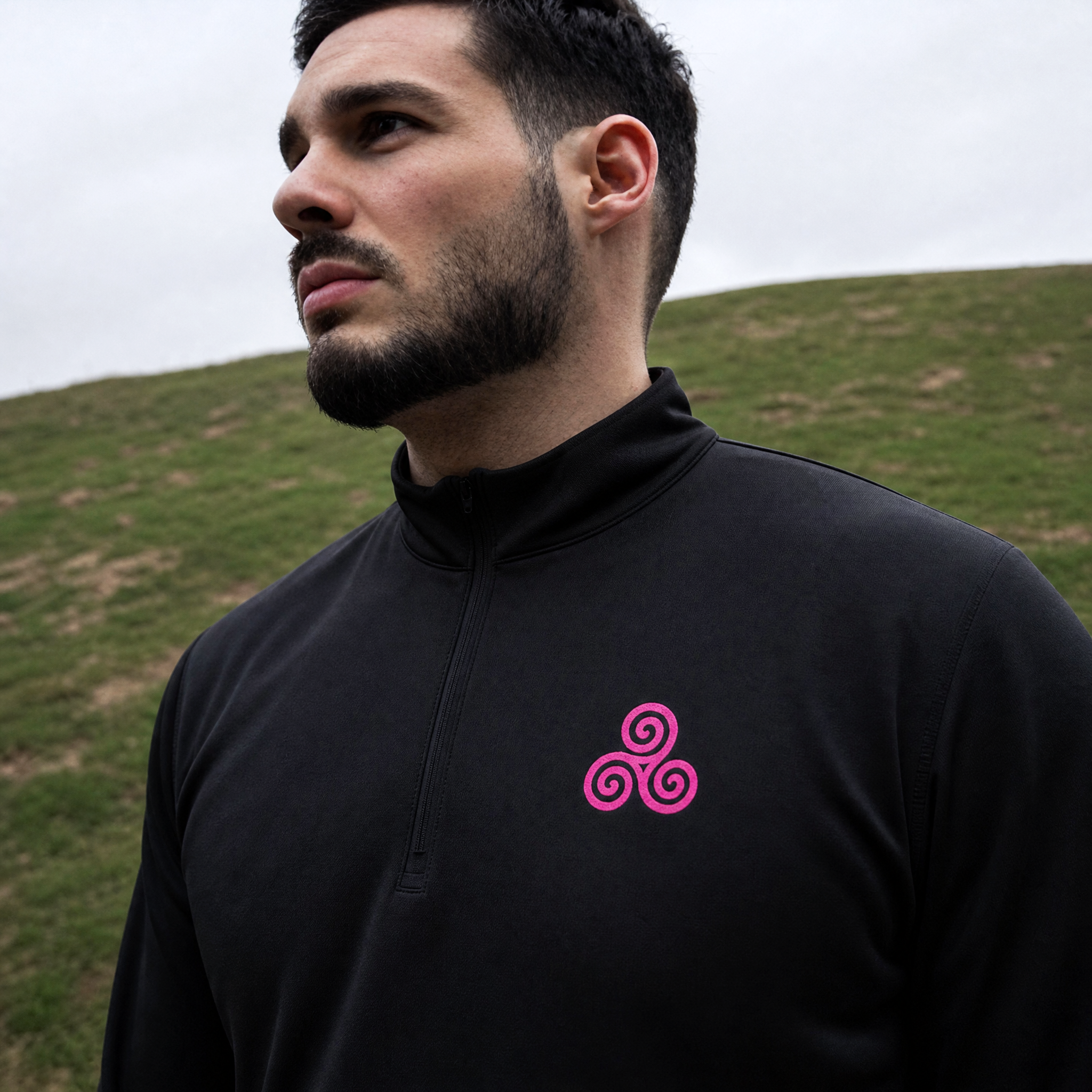
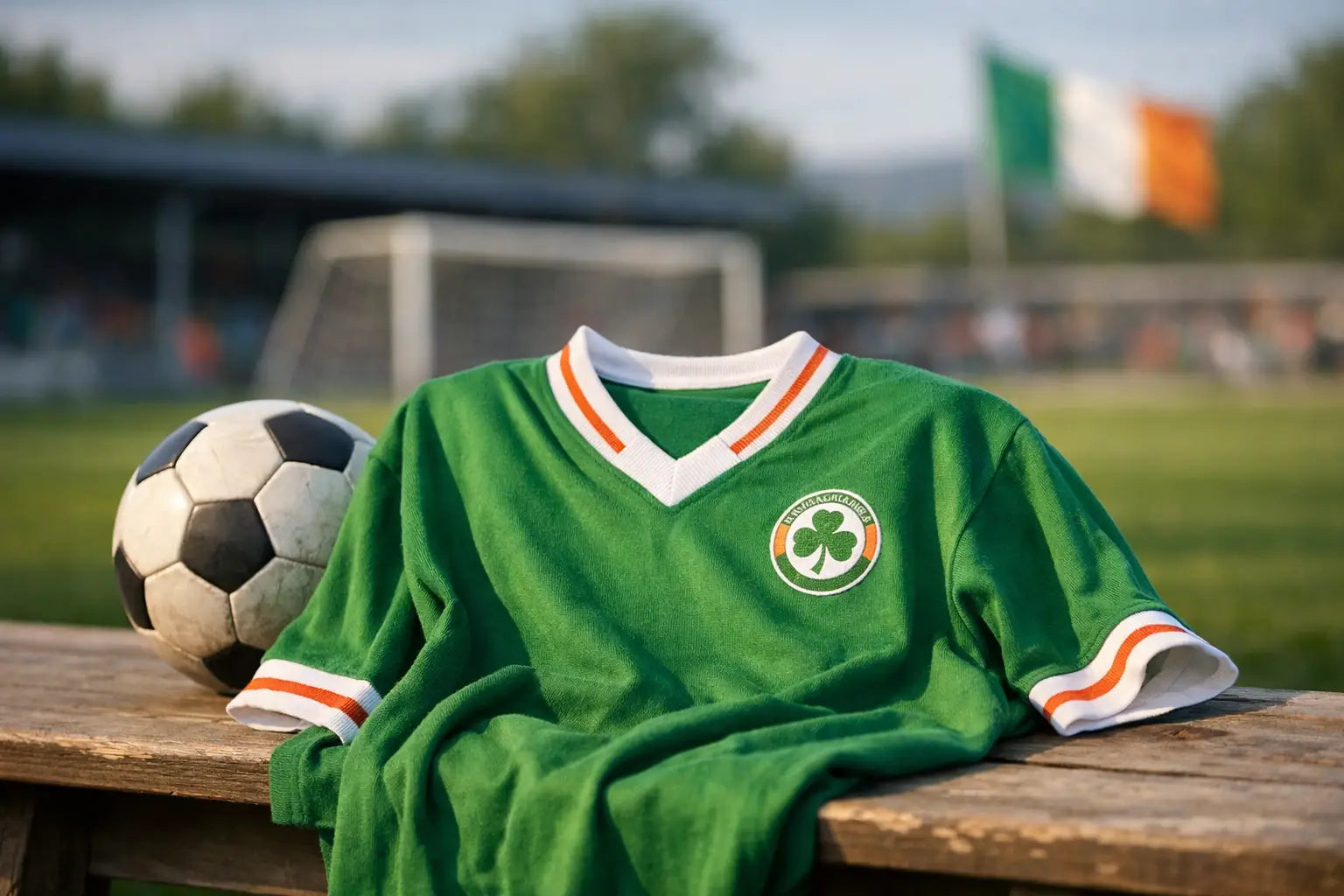
A retro irish jersey says something before you do. Not in a costume-shop way. Not in a plastic-paddy, once-a-year-for-March way. In the right cut, colour and crest, it carries memory, place and a bit of edge. It tells people you know the difference between wearing Irishness and performing it.
That is exactly why it still holds power. Some pieces survive fashion cycles because they never belonged to fashion in the first place. They belonged to identity.
What makes a retro Irish jersey feel right
The best retro pieces do not chase nostalgia for its own sake. They bring back the codes that mattered - older collar shapes, bolder panel details, traditional county or national colour stories, Gaelic references, vintage sponsor-era energy, and that unmistakable mix of pride and grit. A proper retro Irish jersey feels lived in, even when it is brand new.
That feeling matters. Too many heritage-inspired garments get cleaned up until there is nothing left but a vague Celtic mood board. The real appeal of retro Irish sportswear is sharper than that. It comes from shirts worn in rivalry, celebration, bad weather, terraces, local pitches and long family memory. Even if you did not stand on a sideline in the 90s, you recognise the honesty in the design.
There is also a difference between vintage and retro. Vintage is original. Retro is a modern reworking of a past era. One is about age. The other is about intention. For most people, retro makes more sense. You get the visual weight of the old references with a fit and fabric you can actually wear now.
Retro Irish jersey style is bigger than sport
Sport is where the jersey starts. It is not where it ends.
For Irish people at home and across the diaspora, these shirts often carry more than match-day energy. They connect county loyalty, national identity, family history and cultural memory in one wearable thing. That is rare. A jacket can look good. A pair of trainers can feel current. A jersey can do both while meaning something.
That is why the retro Irish jersey has moved beyond the pub, the stadium and the sofa on match day. It works in the streetwear space because it already has what most streetwear tries to manufacture - tribe, symbolism and attitude. It does not need a fake backstory. The story is already there.
For second- or third-generation Irish people abroad, that pull can be even stronger. A well-made retro jersey is often less theatrical than novelty Celtic gear and more emotionally direct than a souvenir. It feels like a real piece of cultural clothing rather than a wink at heritage. You can wear it because it looks strong, but also because it keeps you close to where your people came from.
Why some retro jerseys hit and others miss
Not every heritage piece earns the word retro. Some just copy surface details and hope the rest fills itself in.
The jerseys that hit usually get three things right. First, they respect proportion. The collar, sleeve length, trim and crest placement all matter. A shirt can have the right colours and still feel wrong if the silhouette is off. Second, they understand symbolism. Green alone is not enough. The details need to feel anchored in Irish visual language, whether that comes through typography, emblems, county references or older sporting cues. Third, they know when to stop. Overdesign kills credibility fast.
That restraint is the difference between something bold and something busy. Irish identity does not need dressing up with every symbol under the sun. One strong reference often lands harder than five weak ones.
There is a trade-off, of course. A more faithful retro cut can feel boxier than some people are used to, while a modernised fit may lose a bit of that old-school weight. It depends on what you want. If you are after authenticity first, you may accept a looser silhouette. If you want an everyday piece, a cleaner fit might serve you better. Neither choice is wrong. The point is knowing which lane the jersey is in.
How to wear a retro Irish jersey now
The easiest mistake is styling it like fancy dress. The fix is simple - treat it like a serious piece of clothing.
A retro jersey works best when the rest of the outfit gives it space. Straight-leg denim, relaxed trousers, clean trainers, a plain overshirt or a good jacket all do the job. Let the shirt lead. It already has enough character.
If the jersey has loud patterning or strong colour blocking, keep everything else pared back. If it is more minimal, you can push the look a bit further with texture - wool outerwear, heavier cotton, worn leather, or a structured cap. The balance matters more than the rules.
Fit matters too. Oversized can work, but only if it looks deliberate. Too tight and it loses its ease. Too baggy and it can drift into parody. You want presence, not pantomime.
There is also no reason to save it for sport. That is old thinking. A good retro Irish jersey belongs in real rotation - weekend wear, travel days, gigs, summer evenings, casual nights out. The whole point of heritage clothing is that it lives with you. If it only comes out twice a year, it is not part of your style. It is just a prop.
The difference between pride and cliché
This is where most brands get it wrong. They treat Irish identity as either souvenir-shop sentiment or aggressive nostalgia. Neither has much depth.
Real pride has shape to it. It can be quiet or loud, polished or rough-edged, old-world or modern. But it needs conviction. A retro jersey works when it understands that heritage is not a theme. It is a position.
That is especially true now, when so much fashion feels detached from place. Trends move fast, references get flattened, and identity is often reduced to whatever is easiest to sell. Against that backdrop, wearing something rooted in Irish culture can feel direct in the best way. It says you know where you stand.
That does not mean every wearer needs the same connection. For one person, the jersey recalls childhood matches and family rituals. For another, it is about county ties. For someone in London, New York or Sydney, it may be a way of carrying home without turning heritage into theatre. The meaning shifts. The strength stays.
Choosing a retro Irish jersey with substance
If you are buying one, look beyond the obvious.
Start with design integrity. Does it feel like a genuine rework of an era, or just a generic green top with a shamrock dropped on it? Then look at wearability. Can you actually style it with what you own, or will it sit in the wardrobe waiting for a themed occasion? Finally, ask whether it reflects the version of Irishness you want to wear - sporting, political, regional, cultural, minimalist or louder.
That last point matters more than people admit. Not everyone wants the same expression of identity. Some want old-school match energy. Some want a sharper streetwear silhouette with heritage underneath. Some want symbolism front and centre. Others prefer the reference to sit lower and hit later. Good design leaves room for that range.
This is where a modern Irish label can get it right. When the aim is not tourist merchandise but identity-led clothing, the jersey stops being a novelty and starts becoming part of a wider wardrobe. That shift changes everything. At EIRIN, that is the line - heritage worn with intent, not approval-seeking nostalgia.
Why it keeps coming back
The retro revival never really ends because the need behind it never goes away. People still want clothing that means something. They still want to wear where they are from without looking stuck in the past. They still want pieces with grit, memory and shape.
A retro Irish jersey answers that in a way few garments can. It is rooted but not rigid. Familiar but not stale. Proud without asking permission.
And maybe that is the real reason it lasts. It is not just about old matches, old photos or old designs. It is about recognising that identity looks better when you wear it on purpose.