

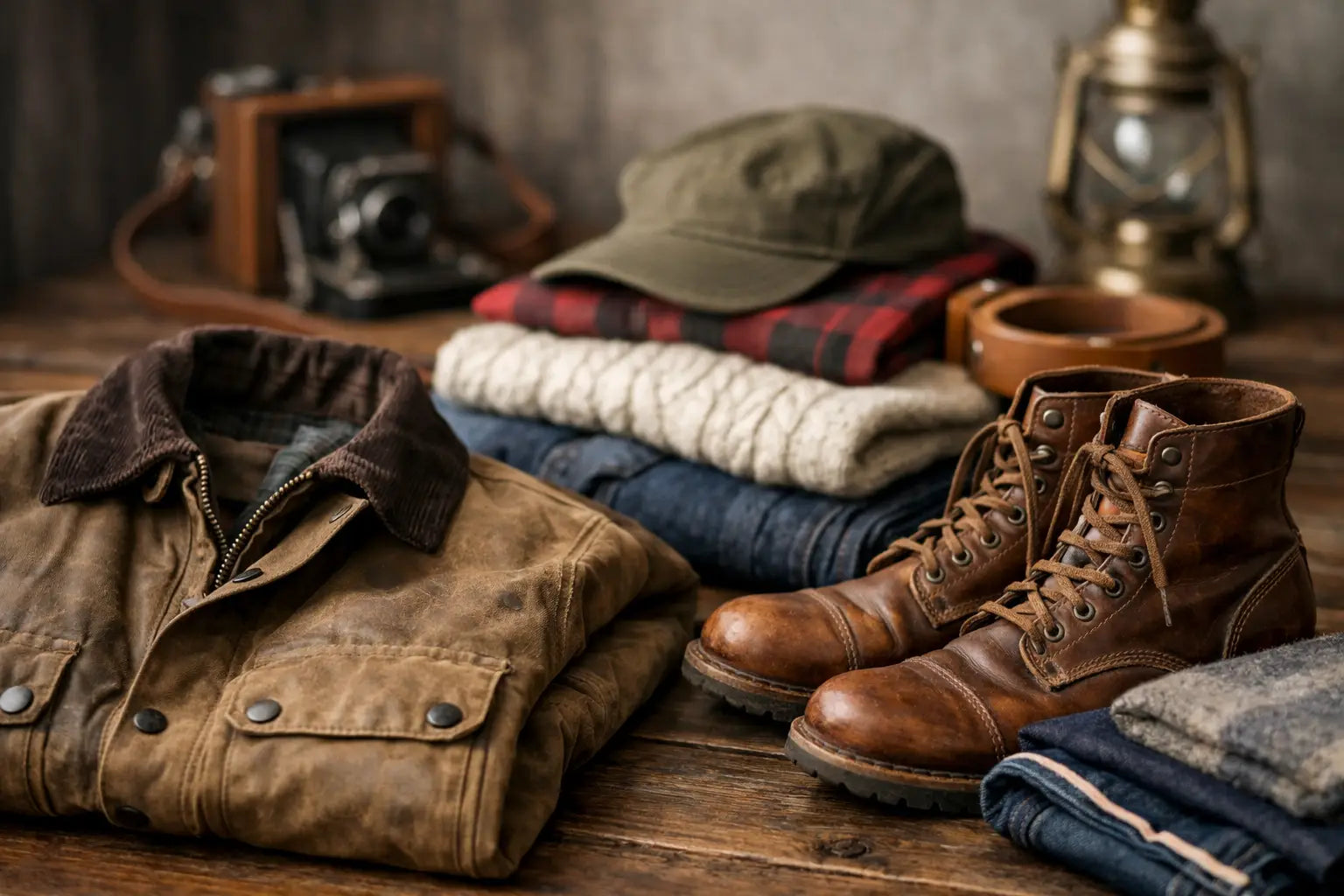
Some clothes fill a gap in your wardrobe. Others say something before you speak. That is why heritage clothing brands still hold weight. They do more than sell fabric and fit. At their best, they carry memory, place, allegiance and attitude - then turn it into something you can wear on an ordinary Tuesday.
That matters more than ever because fashion is crowded with noise. Trends move fast, sameness moves faster, and plenty of brands borrow the look of history without carrying any of its meaning. A cable knit here, a workwear jacket there, a Celtic motif dropped onto a generic blank. It can look the part from a distance. Up close, it often feels hollow.
Real heritage has substance. It comes from people, places and symbols with roots. It has texture because it was not invented in a brainstorm to catch a passing mood. Whether it shows up in military references, regional tailoring, craft traditions, trade uniforms, sporting codes or cultural emblems, heritage means there is a reason the garment exists. The best brands understand that. They do not treat the past like a costume rail. They treat it like a living language.
What heritage clothing brands actually stand for
The phrase gets thrown around too easily. Not every label with an old-style logo or a washed-out campaign is a heritage brand. Age alone is not enough. Neither is nostalgia.
Heritage clothing brands usually have one of two strengths, and the strongest have both. First, they are tied to a real tradition - craft, region, trade, sport, community or national identity. Second, they know how to carry that tradition forward without freezing it in time.
That second part is where plenty of brands get stuck. If heritage only means repeating old shapes exactly as they were, it starts to feel like museum merchandising. Respecting history is one thing. Being trapped by it is another. The point is not to dress like a reenactment. The point is to take what still matters and make it wearable now.
This is where design choices count. A pattern can be cleaned up. A symbol can be sharpened. A silhouette can shift from formal to everyday. A piece can move from ceremonial to street-ready without losing its backbone. Done right, it feels current and grounded at the same time.
Why heritage clothing brands connect so strongly now
The answer is not just quality, though quality plays its part. It is also identity.
People are tired of anonymous style. Mass fashion gives you options, but not always connection. You can buy ten versions of the same jacket and still feel like none of them belong to you. Heritage changes that because it gives clothing a point of view.
For some, that connection is personal. It might be where they are from, what they grew up around, what their family passed down, or what symbols still mean something in the house they were raised in. For others, especially across the diaspora, it is about reclaiming a line back to home. Not through cliché. Not through novelty. Through pieces that feel contemporary enough to wear anywhere, but rooted enough to mean something.
That is why heritage resonates beyond trend cycles. It answers a different question. Not what is everyone wearing right now, but what represents me.
Heritage fashion and the line between pride and costume
This is where the conversation gets sharper. Heritage can be powerful. It can also be mishandled.
There is a clear difference between wearing culture and reducing it. The strongest heritage brands know the line. They understand the symbols they use, the histories they draw from and the people they are speaking to. They do not flatten everything into a vague mood board of old-world references and call it authenticity.
That matters in Irish design especially. Irish heritage is often commercialised through caricature - overdone green, novelty graphics, pub-gift sentimentality, symbols stripped of context. It turns a living culture into a souvenir category. People who want to wear their identity with pride usually see through that quickly.
The better approach is cleaner and bolder. Let the meaning carry the weight. Use language, symbolism and references with purpose. Give the wearer something that feels self-assured rather than performative. That is a different proposition entirely. It says you are not dressing up as an idea of Irishness. You are wearing it as part of who you are.
What separates strong heritage clothing brands from weak ones
First, they know what they are preserving. That sounds obvious, but it is often missing. A brand should be able to point to the craft, culture or code behind its designs. If it cannot, heritage is just styling.
Second, they edit. Not every old detail deserves to survive unchanged. Some garments belong to a time, trade or social rule that no longer fits the way people live. Good brands know how to keep the spirit while dropping the dead weight.
Third, they avoid apology. Heritage does not need to be softened until it becomes generic. If a brand comes from somewhere specific, that specificity is the strength. The best labels lean into it. Regional accents, native language, historical references, local materials, cultural symbols - these are not obstacles to broad appeal. They are the reason people care.
Fourth, they understand that fit and styling still matter. Meaning alone will not save a bad garment. If the cut feels dated in the wrong way, or the piece only works in narrow circumstances, people admire it more than they wear it. Heritage has to live in real wardrobes.
The modern shift: from tradition to statement
One reason heritage is having a stronger moment in contemporary fashion is that it now crosses into streetwear, sport and everyday styling far more easily than before.
That shift changes everything. Heritage used to be boxed into formalwear, occasion dressing or niche enthusiast circles. Now it can show up on a heavyweight tee, a reworked cap, a clean jersey, a chain, a ring or a graphic layer with real intent behind it. The message is not subtle, but it is not stiff either.
This is where younger buyers, especially in Ireland and across the diaspora, are reshaping the category. They are not looking for costume-correct heritage. They want pieces they can wear with denim, trainers and outerwear without feeling theatrical. They want symbols that still hit, just without the dust.
That is exactly why brands like EIRIN land where generic heritage labels do not. The strongest modern heritage brands understand that cultural pride does not need to be dressed in old rules. It can be sharp, stripped-back and direct. It can hold history and still move like streetwear.
Heritage clothing brands are not all the same
There is a trade-off here, and it is worth saying plainly. Some heritage brands lean heavily into craftsmanship and slow production, which can mean higher prices and narrower styling. Others prioritise accessibility and modern wearability, which can sometimes mean less traditional construction or a looser relationship to original forms.
Neither route is automatically better. It depends what the wearer values most.
If you want a piece that preserves historical methods almost exactly, you may accept a more old-fashioned cut or a steeper price. If you want daily wear with cultural backbone, you may prefer a brand that updates materials, fit and styling to suit modern life. The key is honesty. A good brand should know which lane it is in.
That honesty also affects storytelling. There is no need to overstate pedigree or romanticise every stitch. Heritage becomes more credible when brands speak clearly about what they are carrying forward and what they are deliberately changing.
How to spot heritage worth wearing
Look past the marketing first. Ask what the brand is actually rooted in. Then ask whether the design feels lived-in or simply themed.
Good heritage clothing brands have clarity. You can see the source. You can feel the intent. The clothes do not rely on nostalgia alone, and they do not erase their origin in pursuit of mass appeal. They hold onto something real, then make it wearable for now.
That can mean a symbol with centuries behind it on a modern silhouette. It can mean a regional staple reworked for everyday use. It can mean language, craft or political history translated into something clean enough for daily rotation. The format changes. The standard does not.
The point of heritage is not to look backwards forever. It is to carry something forward without watering it down. The brands that understand that will always matter, because people will always want more from clothing than a trend and a logo.
Wear the pieces that know where they come from. They usually know where they are going too.


