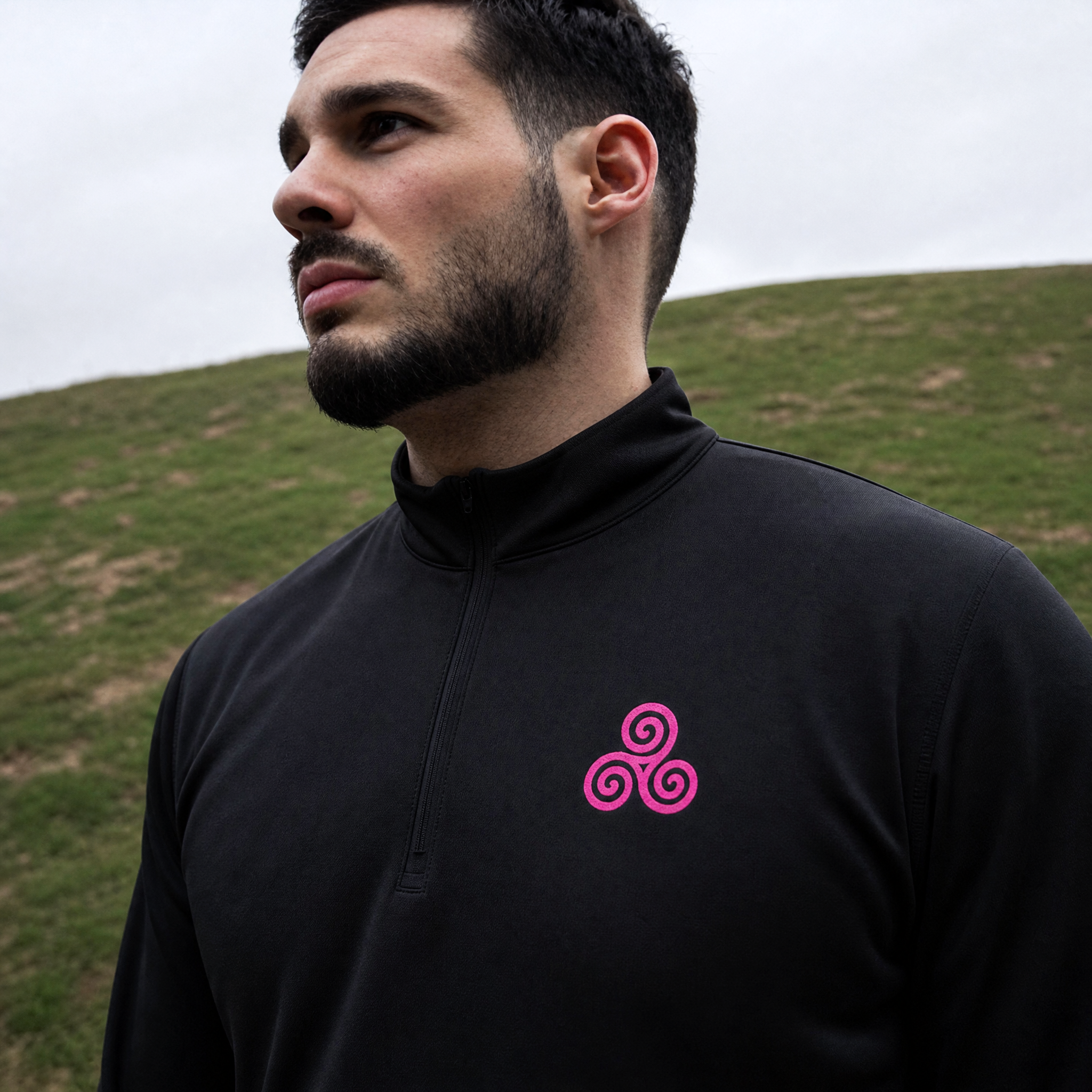

A crest on the chest means one thing in a souvenir shop and something else entirely on the street. Same goes for a phrase in Gaeilge, a reworked flat cap, a retro jersey, or a ring loaded with memory. Context changes everything. That is why heritage inspired streetwear has force when it is done properly - it does not dress culture up for novelty, it wears identity like it belongs there.
This matters because people are tired of blank clothes pretending to say something. They want pieces with weight. Not costume. Not parody. Not faux nostalgia packaged for a season and dropped the next. They want shape, attitude, and meaning in the same garment. Heritage, when treated with respect and confidence, gives streetwear that edge.
What heritage inspired streetwear actually means
At its best, heritage inspired streetwear is not a museum project in a hoodie. It is the collision of old symbols and modern codes. Traditional references are stripped of dust, then rebuilt for everyday wear. The result should feel current enough for the city and grounded enough to carry a story.
That could mean a Gaelic slogan on a clean heavyweight tee. It could mean sportswear influenced by older county colours or vintage Irish jerseys. It could mean jewellery that takes a symbol like the Claddagh and presents it without sentimentality. The principle stays the same. Heritage is the source, not the costume.
That distinction is where many brands get it wrong. They confuse reference with relevance. Slapping a Celtic motif across a garment does not automatically create depth. If the design feels lazy, overworked, or made for tourists rather than real wardrobes, people can see it instantly. Streetwear is ruthless like that. If it feels forced, it dies on contact.
Why it hits harder than trend-driven fashion
Trend-led fashion wants urgency. Buy it now, wear it six times, forget it by next month. Heritage inspired streetwear works on a different timeline. It pulls from symbols, language, sports history, craft references, political memory, and local pride. Those things do not expire because an algorithm moved on.
For Irish style in particular, that makes a difference. Irishness has often been sold back to people as a novelty - shamrocks, leprechaun caricatures, pub-sign clichés, all surface and no spine. That version is easy to market because it asks nothing of the wearer. Real heritage asks more. It asks for recognition. It asks for confidence. It asks whether the piece still says something once the joke is gone.
That is why the strongest labels do not soften the message. They sharpen it. They understand that cultural dress can be everyday wear without becoming quaint. A cap can carry working-class history and still look sharp with modern outerwear. A jersey can nod to the past and still feel hard enough for right now. A phrase in Irish can land like a statement, not a lesson.
The balance that makes it work
There is always tension in this space, and that is a good thing. Too much heritage and the piece starts looking theatrical. Too much streetwear and the cultural reference becomes decoration with no roots. Good design sits in the middle.
That balance usually comes down to restraint. One strong symbol often does more than five weak ones. A clean silhouette gives heritage room to speak. Better fabric helps too. If the garment feels cheap, the message weakens with it. Identity deserves better than thin cotton and a rushed print.
Styling matters as well. Heritage inspired streetwear lands best when it slots naturally into a real wardrobe. Think a Gaelic graphic tee under a structured jacket. Think a retro sports top with loose trousers and solid footwear. Think symbolic jewellery worn simply, without trying to explain itself. The point is not to perform culture. The point is to live in it.
Heritage inspired streetwear and the Irish identity shift
There is a bigger shift behind the rise of heritage-inspired fashion. Irish identity, especially among younger wearers and the diaspora, is no longer being treated as something to tone down, flatten out, or save for special occasions. It is moving into daily dress with more confidence.
That change is not only about nationalism, and it is not only about nostalgia. It is about ownership. People want to decide how their heritage looks in public. They want to wear symbols from where they come from without feeling trapped by old stereotypes. They want clothes that feel local in meaning and global in shape.
That is where brands such as EIRIN have found their lane. Not by asking people to dress traditionally, but by proving that tradition can move. Irish identity does not need to be framed like a relic. It can sit in a streetwear silhouette and still carry history. Maybe more powerfully, because now it reaches beyond ceremonies and tourist districts and into ordinary life.
What to look for if you want the real thing
The easiest way to judge heritage inspired streetwear is to ask a blunt question - would someone with a real connection to this culture actually wear it? If the answer feels shaky, the design probably is too.
Authenticity is not only about where a brand is based. It is also about intent, fluency, and editing. Does the piece use heritage symbols with clarity, or does it pile references together because they look vaguely traditional? Is the language correct? Does the garment feel like it belongs to the wearer, or like it was made for someone looking in from the outside?
You can usually spot the difference in the details. Strong brands know when to keep the design sparse. They understand proportion. They use symbolism with purpose. They avoid turning culture into a collage. And crucially, they make garments people actually want to wear, not just admire online.
Price can complicate things. Better fabrics, proper design work, and thoughtful production tend to cost more than throwaway merch. But expensive does not always mean better. Some labels hide weak ideas behind premium positioning. The smarter move is to look for coherence. If the story, design, fit, and finish all pull in the same direction, that is usually a better sign than price alone.
Why symbolism still matters in streetwear
Streetwear has always been about signalling. Scenes, teams, neighbourhoods, politics, music, resistance. You wear what you back. Heritage slots into that logic naturally. A symbol is not just decoration when it marks belonging.
That is especially true for people in the diaspora. Clothing can become a way to close distance. Not in a sentimental, costume-party sense. In a daily, practical sense. A hoodie, ring, scarf, or cap can carry the memory of home, family, language, or history into places far from where those things began.
But there is a line. Symbolism works best when it is worn with understanding, not just appetite. The strongest pieces invite connection without reducing culture to aesthetics. They make room for pride without becoming stiff or preachy. That is harder to pull off than it sounds, which is why so few brands do it well.
Where the category goes next
The future of heritage inspired streetwear will belong to brands that stay specific. Not broader. Not blander. Specificity is the point. The more clearly a label knows its cultural language, the more powerfully it can speak to people beyond it.
That does not mean being closed off. It means having a point of view. Irish design, when filtered through streetwear, does not need permission to be modern. It needs confidence. Better cuts, stronger graphics, smarter references, and less pandering. The audience is there already. They are not looking for heritage made safe. They are looking for heritage with backbone.
Fashion gets forgettable when it tries to please everyone. Identity never has. If you are going to wear where you come from, wear it like you mean it.