

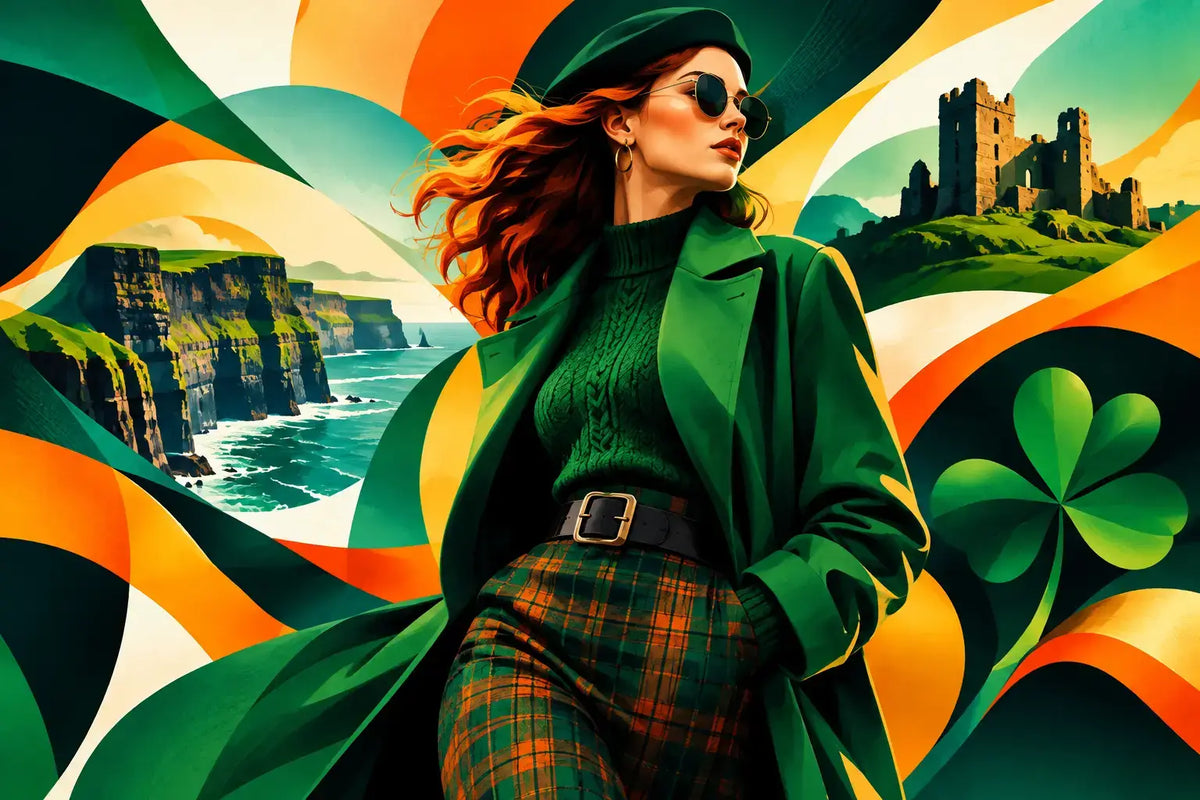
A good Irish outfit should not look like it came from a souvenir rack. It should feel like yours. Knowing how to build Irish outfits means taking the culture, symbols and colours that mean something to you, then wearing them with enough confidence to make them current.
That might be a Gaelic slogan tee under a clean overshirt. A reworked flat cap with a simple black jacket. A Claddagh ring worn every day, not saved for a wedding or a special occasion. Heritage has weight. Style is how you carry it.
Start with identity, not costume
The quickest way to flatten Irish style is to wear every recognisable symbol at once. Green, shamrocks, Celtic knots, tartan, a novelty slogan and a leprechaun hat do not make a stronger statement. They make the statement less believable.
Pick one cultural anchor for the outfit. It could be language, sport, jewellery, county pride, republican history, traditional headwear or the colours of the island. Let that one piece lead. Everything else should give it room.
If you are wearing a graphic T-shirt with Irish text, pair it with neutral trousers, worn-in denim or simple cargos. If the centrepiece is a bold jersey, keep the footwear clean and the accessories restrained. The point is not to prove how Irish you are. The point is to wear your Irishness without asking for approval.
For diaspora wearers, this matters even more. You do not need to perform an identity to strangers. A familiar phrase, a symbol from home, or a piece that reminds you of family can say plenty. Quiet connection is still connection.
Build Irish outfits around one strong piece
Start with the item that has the most character, then build outward. A heritage-inspired piece should be the reason the look exists, not an afterthought added at the end.
A Gaelic slogan T-shirt is one of the easiest foundations. Choose a fit that suits how you already dress: relaxed if you lean streetwear, closer-cut if you prefer a sharper silhouette. Wear it with black jeans and trainers for everyday simplicity, or layer it beneath an open overshirt and a structured coat when the weather turns.
A retro Irish jersey carries more visual energy. Treat it like a statement jacket rather than a basic top. Dark denim, plain track trousers or loose olive cargos work because they do not compete with the colour and crest. Avoid matching it with too many team-style pieces unless you are heading to a match. Off the pitch, contrast gives it more life.
Headwear can do the same job. A flat cap has history, but it does not need to look old-fashioned. Choose one with a cleaner shape and wear it with contemporary outerwear: a work jacket, a bomber, a mac or a heavyweight overshirt. It is the tension between old codes and modern cuts that makes the outfit feel alive.
Jewellery works differently. A Claddagh ring, harp pendant or subtle Celtic detail can sit inside almost any wardrobe. It is often the best route if you want your heritage present but not loud. One meaningful piece worn often says more than a handful of random accessories.
Use colour with purpose
Irish colour is bigger than bright green. Green has its place, but the palette is broader, tougher and easier to wear than the cliché suggests. Think deep bottle green, cream, charcoal, black, navy, stone, rust and the muted tones of wool, weathered buildings and the coast.
A dark green sweatshirt against washed black denim feels unmistakably Irish without becoming a theme outfit. Cream knitwear with navy trousers has a classic, grounded look. A green cap can lift an otherwise all-black fit. Small shifts in shade matter more than piling on colour.
Orange deserves some care. It carries real political and cultural context, particularly across the island. That does not mean it is off limits, but it does mean it should be worn knowingly rather than as a decorative afterthought. If your outfit is built around Irish identity, symbolism is not just surface-level design.
Tricolour references can look strong when handled with restraint. Try a single colour-blocked detail, a small accent in a graphic or a palette that nods rather than shouts. Three bold blocks of green, white and orange across the same outfit can quickly slip into fancy-dress territory.
How to build Irish outfits with texture and layers
Irish style has always made sense in layers. The climate helps, but so does the visual language: wool, cotton jersey, brushed flannel, canvas, leather and heavier knits all carry substance. Texture gives a simple outfit depth before you even add a graphic or symbol.
In cooler months, start with a plain base layer, add an Irish graphic tee or sweatshirt, then finish with a practical jacket. A black tee under a green overshirt and a waxed or workwear-style coat is clean, functional and easy to repeat. Keep the trousers simple. Straight-leg denim and sturdy boots will do the work.
For a smarter look, a fine knit or plain shirt can sit beneath a tailored coat, with heritage jewellery supplying the cultural note. This is useful for dinners, family events or occasions where a football jersey is not the right call. Irish identity does not disappear when you dress up. It just takes a different form.
In warmer weather, rely on fit and detail rather than layers. A heavyweight tee, relaxed shorts, good socks and a cap are enough. If the T-shirt carries a slogan or graphic, give it clean space. You do not need to turn every outfit into a billboard.
Balance heritage with the way you actually dress
The strongest looks borrow from your existing wardrobe. If you live in trainers, cargos and oversized tees, bring Irish elements into that world. If you prefer tailored trousers and minimal layers, use a ring, pendant, knit or understated graphic. Copying someone else’s idea of traditional dress rarely works because the fit feels borrowed.
There is also no single authentic Irish look. Dublin streetwear, rural workwear, GAA culture, punk, trad, terrace style and diaspora fashion all overlap, clash and evolve. That is the point. Irishness is not frozen in a museum case.
EIRIN is built around that friction: old symbols, current silhouettes, no permission required. A heritage piece earns its place when it feels wearable beyond St Patrick’s Day, a match day or a flight home for Christmas.
Pay attention to proportion. If your top is oversized, choose a straighter or more fitted trouser. If you wear a loose jersey, avoid equally bulky layers underneath. A flat cap and long coat can look sharp, but adding a giant scarf, heavy boots and a busy knit may tip the balance. One statement, one supporting texture, one reliable base is usually enough.
Know when to go loud and when to hold back
Some moments call for the full expression. A festival, a gig, a match, a parade or a big family gathering can carry a bold jersey, a loud graphic and visible accessories well. The setting understands the energy. Wear it with intention rather than irony.
For everyday errands, work or a night out, reduce the volume. A single Irish tee under a jacket, a pendant over a plain knit, or a cap with an otherwise neutral outfit often hits harder. People notice details when they are not fighting for attention.
The same rule applies to slogans. Irish language apparel can be powerful, especially when the phrase has real meaning to you. Know what it says. Pronounce it if you can. Wear it because it connects, not because it looks exotic. Culture deserves better than decoration.
Make it personal enough to keep wearing
The final test is simple: would you wear the outfit if nobody asked about it? If the answer is yes, you have probably got it right. The best Irish pieces become part of your rotation because they work with your life, not because they only work on a themed occasion.
Build slowly. Start with one T-shirt, one piece of jewellery or one hat that feels right. Learn what you reach for, what fits your shape and what reflects your version of home. Then add from there. Culture over costume. Identity over approval.


