

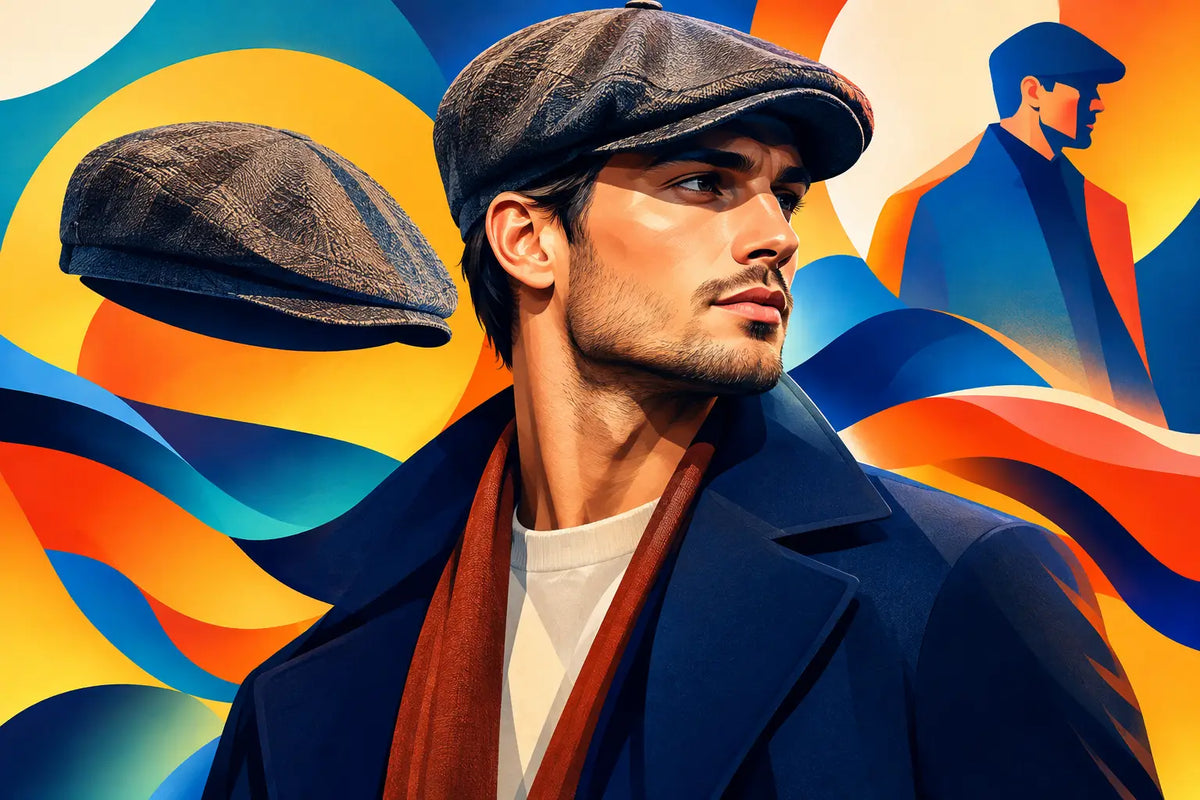
A flat cap can tell two very different stories. Worn without thought, it can feel like a costume pulled from a pub wall. Worn with the right shape, texture and confidence, it looks sharp, grounded and entirely current. So, are flat caps still fashionable? Absolutely. But the old rules have gone. This is not about dressing like somebody’s granda. It is about making heritage work on your terms.
The flat cap has survived because it has always had more substance than a passing trend. It belongs to working-class history, rural life, city streets, sport and Irish identity. That weight is exactly what gives it power now. In a fashion cycle full of disposable references, a cap with a real story stands out.
Why flat caps have never really left
Fashion loves to declare things dead, then bring them back with a new price tag and a different mood. Flat caps have avoided that fate because they have never disappeared from the people and places that gave them meaning. Across Ireland, Britain and the diaspora, they have remained part of the visual language of everyday life.
What has changed is the styling. The classic tweed cap still earns its place, especially in colder months and at formal occasions, but contemporary flat caps are no longer confined to country wear. Clean wool blends, cotton, corduroy and understated patterns make them easy to wear with workwear, denim, overshirts, knitwear and tailored outerwear.
The current appeal is not nostalgia for nostalgia’s sake. It is the tension between tradition and modernity. A flat cap brings texture and character to an outfit that might otherwise be anonymous. It says you know where you come from, without needing to turn yourself into a museum exhibit.
Are flat caps still fashionable for younger wearers?
Yes, particularly when they are treated as part of a wider personal style rather than a fancy-dress shortcut. Younger wearers have helped move the flat cap away from the predictable image of Sunday best and towards streetwear, vintage workwear and heritage-inspired casual dressing.
The strongest looks do not chase an old-fashioned stereotype. They mix eras with intention. Think a dark flat cap with a heavyweight T-shirt, loose trousers and clean trainers. Or pair a textured cap with a structured overshirt, straight-leg denim and proper leather boots. The cap gives the outfit a point of view. The rest of the look keeps it in the present.
This is where proportion matters. A slim, fitted blazer with skinny jeans and a tiny cap can look dated quickly. Relaxed cuts give the cap room to breathe. Wider trousers, boxier jackets and layered textures create a modern silhouette while keeping the headwear from feeling overly precious.
There is no age limit, either. The difference between looking considered and looking like you borrowed a costume is never the number on your birthday card. It is whether the cap feels connected to how you already dress.
The fit decides everything
A great flat cap should sit low enough to look natural, but not so low that it crowds your eyebrows or shadows your face. It should follow the shape of your head without pinching at the sides. If it feels tight in the shop, it will feel worse after an hour outside.
Avoid the temptation to size up for a slouchy look. An oversized flat cap tends to lose its clean line and can make the wearer look swallowed by the crown. The right fit is secure, comfortable and almost forgettable. You should notice the look, not the adjustment.
Face shape can guide the choice, but it should not dictate it. A fuller, more rounded crown can balance a longer face, while a closer-fitting profile often works well on broader or rounder faces. Try different shapes before deciding that flat caps are not for you. One cut may feel wrong; another may suddenly make sense.
Hair also changes the equation. A cap looks different over close-cropped hair, curls, long hair or a sharp fringe. There is no correct formula. The aim is simple: let the cap frame your face, rather than hide it.
Choose fabric for the life you actually live
Tweed earns its reputation. It is durable, rich in texture and tied closely to Irish and British heritage. In charcoal, brown, olive or muted herringbone, it works brilliantly with wool coats, knitwear and heavier fabrics. It is not, however, the only route.
Cotton and linen blends feel lighter for spring and summer, particularly in stone, navy or faded green. Corduroy has a relaxed, slightly rebellious quality that pairs well with chore jackets and worn-in denim. Wool caps in plain, dark colours are perhaps the easiest all-round option: enough texture to feel intentional, not so much pattern that they dominate an outfit.
If you are buying your first flat cap, start with a versatile shade. Charcoal, dark brown, navy and olive will carry you further than a loud check. A bold pattern can be excellent, but it needs simpler clothing around it. Let one piece make the noise.
The same rule applies to logo-heavy outfits. A flat cap already has presence. Pair it with a statement jersey or graphic tee if that is your style, but keep the rest clean. Identity does not need to shout from every inch of fabric to be heard.
How to style a flat cap without looking staged
The most reliable approach is to build from clothes you genuinely wear. If your wardrobe leans towards denim, begin there. A plain tee, overshirt, straight jeans and boots or trainers can take a dark flat cap easily. The cap becomes part of the uniform, not a prop added at the last second.
If you prefer tailoring, use contrast. A soft, textured cap looks good against a sharper coat or unstructured blazer because it stops the outfit becoming too polished. Keep colours connected: a brown cap can pick up the warmth in a camel coat, while charcoal works naturally with black, grey and navy layers.
For colder days, a flat cap sits well with a wool overcoat, chunky knit and scarf, but beware of piling on every heritage reference at once. Cap, waistcoat, pocket watch and heavy tweed jacket is not a look. It is a theme night. Choose one or two traditional elements, then ground them with contemporary pieces.
For warmer weather, keep it lighter in every sense. A cotton cap, relaxed camp-collar shirt, plain vest or tee and loose trousers gives a more effortless result. The cap should feel like protection from the weather and a finishing touch, not a performance.
EIRIN approaches the flat cap in that spirit: Irish heritage with a cleaner edge. The point is not to copy the past. The point is to wear it like it belongs to you.
When a flat cap may not be the right move
Not every occasion calls for one. A highly formal event, a strict business setting or a hot day with no shade can make a flat cap feel impractical or out of place. That is not a failure of the cap. It is simply good judgement.
It also depends on the rest of the outfit. If you are wearing highly technical sportswear, a traditional tweed cap can clash rather than contrast. A plainer cotton style may bridge the gap, or you may be better off leaving headwear aside. Style is not about forcing every favourite piece into every look.
Confidence has limits too. Wearing a cap badly on purpose is not rebellion. The strongest version of personal style understands context, then chooses where to push against it.
The real reason flat caps still matter
A flat cap is fashionable because it carries a past without being trapped in it. It has the rare ability to look practical, personal and distinctive all at once. For people with Irish roots, it can be a quiet connection to family, place and memory. For anyone else, it can still be a lesson in wearing heritage with respect rather than turning it into decoration.
Trends will keep shifting. One season will favour minimalism, the next will chase maximalism. A well-chosen flat cap remains outside that scramble because it is built on character, not hype. Wear one when it adds something real to the outfit, choose a fit that feels like your own, and let the history show without asking permission.


![Eirin Apparel Claddagh Earrings Chunky Gold-Plated Claddagh Hoop Earrings – 'Soláis' (Sunlight) [collection-cover-only]](http://eirin.co/cdn/shop/files/eirin-apparel-claddagh-earrings-chunky-gold-plated-claddagh-hoop-earrings-solais-sunlight-1260024173.png?v=1790378984&width=1254)

![Eirin Apparel Claddagh Earrings Chunky Silver-Plated Claddagh Hoop Earrings – 'Réalta' (Starlight) [collection-cover-only]](http://eirin.co/cdn/shop/files/eirin-apparel-claddagh-earrings-chunky-silver-plated-claddagh-hoop-earrings-realta-starlight-1260024174.png?v=1790378955&width=1254)

![Eirin Apparel Claddagh Earrings Dainty Gold-Plated Claddagh Hoop Earrings – 'Gríanóg' (Little Sun) [collection-cover-only]](http://eirin.co/cdn/shop/files/eirin-apparel-claddagh-earrings-dainty-gold-plated-claddagh-hoop-earrings-grianog-little-sun-1260024172.png?v=1790379015&width=2048)

![Eirin Apparel Claddagh Earrings Gold-Plated Sterling Silver Claddagh Earrings – ‘Croi Óir’ (Golden Heart) [collection-cover-only]](http://eirin.co/cdn/shop/files/eirin-apparel-claddagh-earrings-gold-plated-sterling-silver-claddagh-earrings-croi-oir-golden-heart-1260024175.png?v=1790378802&width=2048)

![Eirin Apparel Claddagh Earrings Celtic Knot Claddagh Earrings – ‘Fáinne an Ghrá’ (Ring of Love) [collection-cover-only]](http://eirin.co/cdn/shop/files/eirin-apparel-claddagh-earrings-celtic-knot-claddagh-earrings-fainne-an-ghra-ring-of-love-1260024176.png?v=1790378776&width=2048)

![Eirin Apparel Women's Earrings Women's Irish Harp Earrings – 'Fuaim' (Sound) [collection-cover-only]](http://eirin.co/cdn/shop/files/eirin-apparel-women-s-earrings-women-s-irish-harp-earrings-fuaim-sound-1260024177.png?v=1790378295&width=2048)

![Eirin Apparel Claddagh Ring Women's Gold-Plated Classic Claddagh Ring – ‘Gréine’ (Of the Sun) [collection-cover-only]](http://eirin.co/cdn/shop/files/eirin-apparel-claddagh-ring-women-s-gold-plated-classic-claddagh-ring-greine-of-the-sun-1260024155.png?v=1790378897&width=1254)

![Eirin Apparel Claddagh Ring Women's Silver-Plated Classic Claddagh Ring – ‘Gealaí’ (Moonlight) [collection-cover-only]](http://eirin.co/cdn/shop/files/eirin-apparel-claddagh-ring-women-s-silver-plated-classic-claddagh-ring-gealai-moonlight-1260024154.png?v=1790378925&width=2048)

![Eirin Apparel Claddagh Ring Women’s Two-Tone Claddagh Ring – ‘Síorghrá’ (Eternal Love) [collection-cover-only]](http://eirin.co/cdn/shop/files/eirin-apparel-claddagh-ring-women-s-two-tone-claddagh-ring-siorghra-eternal-love-1260024158.png?v=1790378653&width=1254)

![Eirin Apparel Claddagh Ring Women’s Chunky Claddagh Ring – 'Dílse' (Faithful) [collection-cover-only]](http://eirin.co/cdn/shop/files/eirin-apparel-claddagh-ring-women-s-chunky-claddagh-ring-dilse-faithful-1260024159.png?v=1790378561&width=1254)

![Eirin Apparel Women's Ring Women's Celtic Knot Ring – 'Síorfhite' (Everwoven) [collection-cover-only]](http://eirin.co/cdn/shop/files/eirin-apparel-women-s-ring-women-s-celtic-knot-ring-siorfhite-everwoven-1260024160.png?v=1790378476&width=1254)

![Eirin Apparel Women's Ring Women's Celtic Crown Ring – 'Banríon' (Queen) [collection-cover-only]](http://eirin.co/cdn/shop/files/eirin-apparel-women-s-ring-women-s-celtic-crown-ring-banrion-queen-1260024161.png?v=1790378441&width=1254)


