

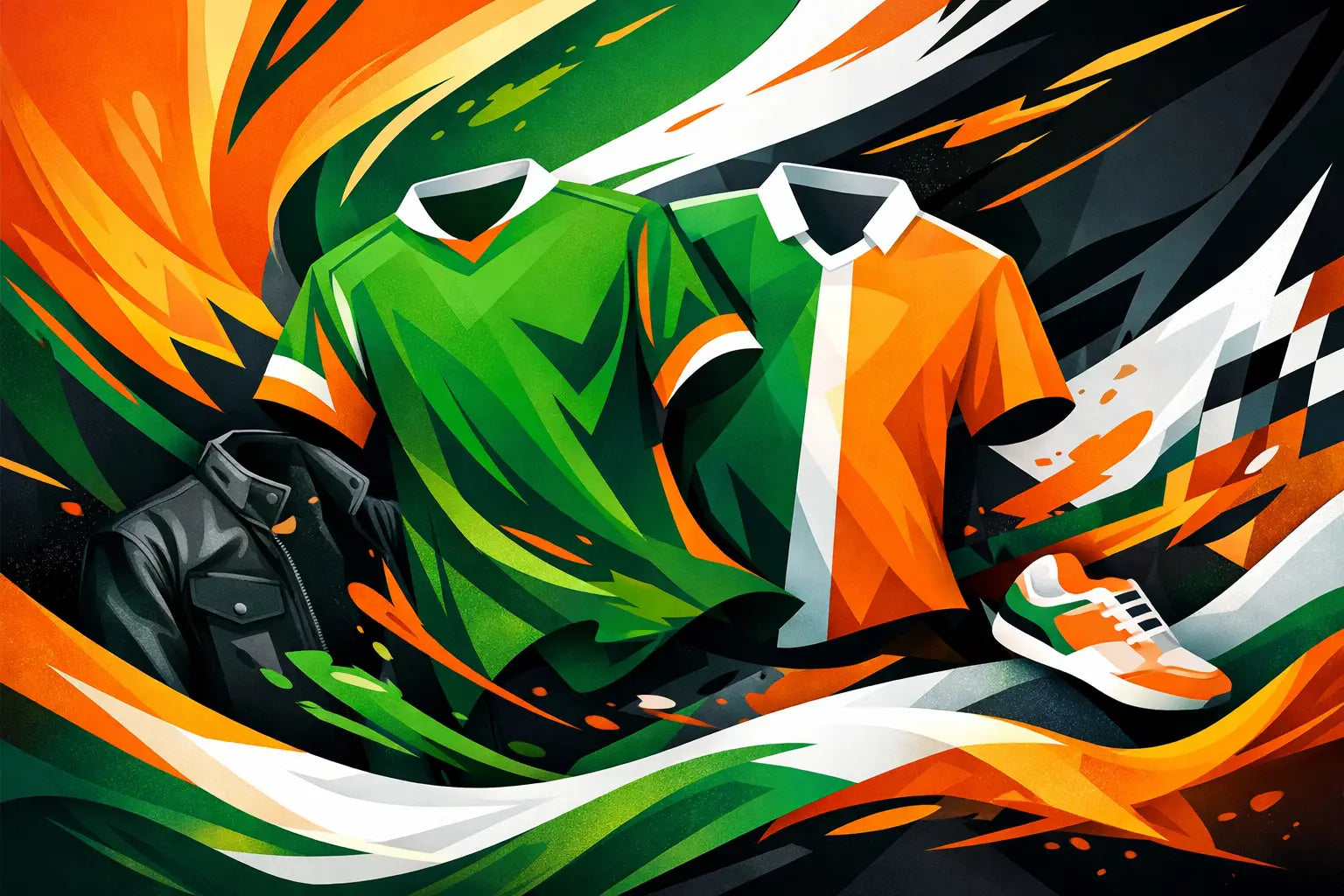
A good jersey should not spend its life reserved for match day. Knowing how to style Irish jerseys means treating them as what they are: bold pieces of cultural clothing with enough character to carry an entire look. Green, cream, black, heritage crests, Gaelic lettering and retro stripes do not need toning down. They need styling with intent.
The difference is simple. Wear it like a costume and it can feel stuck in the past. Wear it like streetwear and it says exactly what it should: this is where I am from, this is what I stand for, and I will wear it my way.
Start with the jersey, not the outfit
An Irish jersey has presence. Whether it is a clean modern cut or a retro-inspired piece, it already brings colour, graphic detail and a strong point of view. Do not bury it under competing logos, loud prints or too many heritage references at once. Let the jersey lead.
That does not mean every other item has to be plain. It means the rest of the fit needs a job. Good denim gives a jersey edge. Relaxed trousers make it feel considered. A sharp jacket changes the setting entirely. Begin by deciding where you are going, then build around the jersey rather than treating it as an afterthought.
Fit matters more than most people admit. A slightly oversized jersey feels easy with straight-leg jeans or loose cargos. A trimmer, classic fit works with tailored trousers, clean chinos or darker denim. If the jersey sits wide through the body, keep the lower half relaxed but controlled. Baggy on baggy can work, but only when the proportions are deliberate rather than accidental.
How to style Irish jerseys for everyday wear
For the strongest everyday look, pair an Irish jersey with washed black or indigo jeans and simple trainers. It is direct, comfortable and hard to get wrong. Keep the trainers clean and low-profile, then add a cap or a single piece of jewellery if you want more personality. The jersey remains the statement, not one item in a shouting contest.
A retro jersey looks especially good against worn-in textures. Think faded denim, canvas overshirts, suede trainers and a well-shaped flat cap. The aim is not to recreate a past decade head to toe. Take one cue from the past, then put it beside pieces that feel current. A vintage-inspired shirt with modern black trousers will always look stronger than a full throwback uniform.
For a cleaner direction, wear a jersey with off-white or stone trousers. This lets the green and graphic detail do the work without making the look feel overly sporty. Choose trousers with a relaxed straight leg rather than anything too slim. Add leather trainers, loafers or a pared-back boot depending on the occasion. It is heritage, but it has grown up.
Black is the safest anchor, but it does not have to be the only one. Charcoal, navy, cream, olive and faded blue all sit naturally with Irish green. Bright red can work as a small accent, particularly where it picks up a crest or trim, but use it sparingly. The point is to create contrast, not turn the outfit into a flag.
Let one detail carry the heritage
Irish style is strongest when it feels lived in, not assembled for approval. If your jersey features a crest, Gaelic phrase or historic reference, there is no need to add Celtic symbols to every available surface. One meaningful piece goes further than five obvious ones.
A Claddagh ring, a silver chain, a signet ring or a restrained pendant can add weight without clutter. Headwear does the same. A black cap keeps the look urban; a reworked flat cap makes the heritage connection more visible. Choose one route and commit to it. Mixing every symbol at once risks making a personal style feel like a souvenir rail.
Layer it when the weather turns
Irish weather has never been interested in clean outfit photos. Layers are not optional, and that is good news for a jersey. An open overshirt over a jersey gives depth without hiding the graphic. Go for heavyweight cotton, denim, brushed flannel or a simple workwear fabric. Keep the overshirt unbuttoned so the jersey still has room to speak.
A bomber jacket is another natural match. Its cropped shape stops a longer jersey from looking shapeless, while the sport-meets-streetwear combination feels effortless. Black, dark green, navy and charcoal are all reliable choices. If your jersey is already heavily patterned, avoid an overly busy bomber. Texture is enough.
For colder days, put the jersey over a fitted long-sleeve tee or thermal layer, then finish with a roomy coat. A dark wool overcoat gives a surprising amount of polish, especially with black trousers and leather boots. This works because the contrast is confident: sporting heritage underneath, clean structure on top. You do not have to dress casually just because you are wearing a jersey.
Hoodies need more care. A jersey over a thin, neutral hooded sweatshirt can look great, particularly with relaxed denim and trainers. But a thick hoodie can bunch up the jersey and distort its shape. If the collar, sleeves or chest print are fighting the layers underneath, leave the hoodie at home.
Dress it up without stripping out the attitude
There is a lazy idea that jerseys belong only with trainers and track bottoms. Ignore it. An Irish jersey can work for a pub night, a gig, a casual dinner or a creative workplace when the rest of the outfit is disciplined.
Try dark pleated trousers, a jersey tucked loosely at the front, and minimal leather footwear. It is not about making the jersey formal. It is about putting it in a different frame. The same applies to an overshirt worn as a light jacket, a neat wool coat, or understated jewellery. The jersey keeps the look grounded while the sharper pieces stop it feeling like you came straight from the terraces.
The trade-off is comfort versus structure. Track bottoms give you an easy off-duty fit, but they can make a statement jersey look more predictable. Tailored trousers create more impact, though they demand better fit and cleaner shoes. Neither is automatically better. It depends on whether you want the outfit to feel familiar or make people look twice.
Choose footwear that does not compete
Footwear decides whether the outfit reads as casual, polished or fully streetwear. White trainers are the obvious option, and for good reason: they work with nearly every Irish jersey colourway. Black trainers bring more edge and are practical when the weather is doing what it does.
For a tougher look, choose a plain leather boot with a rounded toe and minimal hardware. It gives a retro jersey a harder, more city-ready finish. Suede trainers or loafers take the outfit in a quieter direction, especially with straight trousers and a cleaner jersey. Avoid footwear covered in logos or bright colours unless it genuinely matches a detail on the shirt. The jersey has already done the talking.
Wear the culture, do not perform it
The best outfits have a point of view, not a checklist. An Irish jersey might connect you to family, a place, a language, a club, a political history or simply the feeling of home when you are far from it. That meaning is enough. You do not need to explain it to make it valid.
EIRIN pieces are made for that kind of wear: heritage with a sharper silhouette and no tourist-shop energy. Pair your jersey with clothes you already live in, then push one element further than usual. Better trousers. A stronger jacket. Jewellery that means something. A hat with shape.
Wear green if you want. Wear black if that is more your speed. Keep it clean or make it loud. The only rule worth following is this: do not dress like you need permission to show where you are from.


