

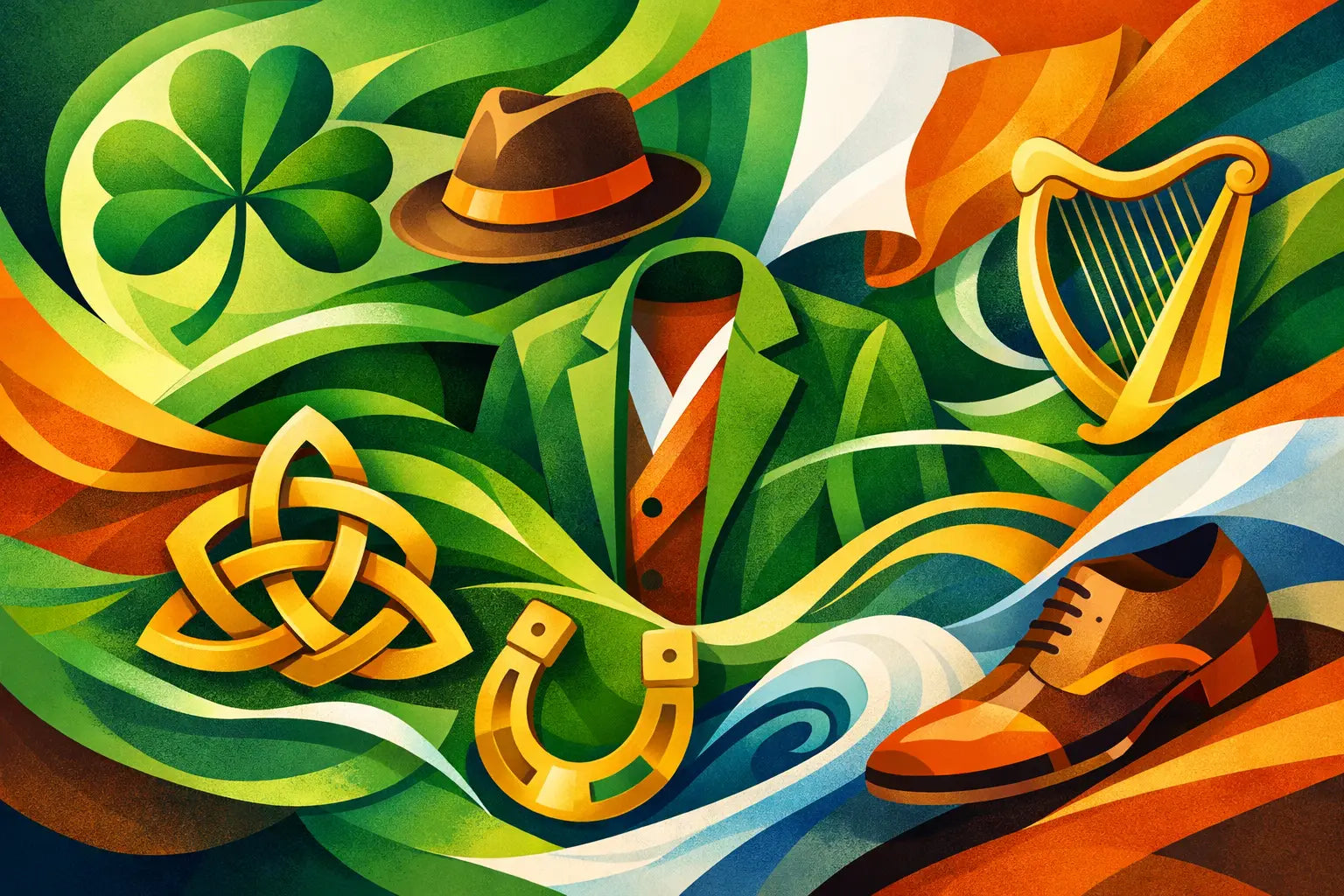
A symbol on your chest, finger or cap should say more than “I’ve been to Ireland”. It should feel like yours. This Irish symbols clothing guide is for wearing heritage with intent - whether you grew up hearing Gaeilge at home, found your way back through family, or simply refuse to dress like everyone else.
Irish style has never needed permission to be loud. The strongest pieces carry history without looking trapped in it. Think clean cuts, heavyweight cotton, sharp jewellery and symbols worn with enough confidence that nobody mistakes them for a souvenir.
Irish symbols clothing guide: start with meaning
A symbol is not just decoration. It can mark love, language, place, memory, rebellion or belonging. Knowing the story gives the piece weight. It also helps you choose what genuinely connects with you rather than grabbing every Celtic motif in sight.
The Claddagh: love, loyalty and friendship
The Claddagh is direct, recognisable and personal. Two hands hold a heart beneath a crown: friendship, love and loyalty. It works brilliantly as jewellery because the meaning is intimate rather than costume-like. A silver Claddagh ring worn daily with a plain tee, knit or jacket is enough. Let it do its job.
The way a Claddagh ring is worn has long been read as a signal about the wearer’s heart and relationship status, although customs vary between families and places. Wear it in the way that means something to you. Heritage is lived, not policed.
The harp: a national symbol with real presence
The Irish harp carries culture, art and national identity in one clean silhouette. On clothing, it is strongest when the graphic is restrained: small at the chest, printed large on the back, embroidered on headwear or worked into a minimal pendant.
A harp does not need a field of shamrocks around it to look Irish. Pair it with black, cream, deep green, washed grey or navy. Keep the styling modern and the symbol lands harder.
Gaeilge: language you can wear
Gaeilge on clothing is more than typography. It is a living language, and the words deserve the same care as the design. A short phrase can signal humour, pride, defiance or tenderness, but check its spelling, translation and regional meaning before wearing it large across your chest.
The best Gaelic slogan tees feel clear even to people who do not speak the language. They invite a second look. They do not need to explain themselves.
The tricolour: identity with context
The Irish tricolour can be powerful, but it is not neutral decoration. Its colours represent aspirations for peace between traditions on the island, and it can carry different political weight depending on where you are and who you are with. That does not mean avoid it. It means wear it deliberately.
A subtle green, white and orange detail, colour-blocked jersey or small patch can feel sharper than turning your entire outfit into a flag. If you choose a full tricolour statement, own the context as well as the look.
Celtic knots and the shamrock
Celtic knots have visual force, especially in jewellery and graphic prints, but they are a broad design language rather than one single ancient code. Choose them because you like their interwoven form and connection to Irish art, not because a product label promises a meaning nobody can support.
The shamrock is equally familiar. That is both its strength and its risk. A small shamrock can look clean and proud. A head-to-toe shamrock outfit can tip into novelty fast. One well-chosen symbol beats a dozen obvious ones.
Make Irish symbolism part of your uniform
The point is not to build a fancy-dress version of Irishness. Build a wardrobe where a meaningful piece sits naturally beside everything else you already wear. Streetwear, workwear, vintage sportswear and minimal tailoring all have room for it.
Start with one anchor. A Gaelic slogan T-shirt under an open overshirt gives a casual outfit a clear point of view. A retro-inspired jersey works with straight-leg denim, trainers and a simple cap. A Claddagh pendant can cut through an otherwise plain black outfit. The rest of the look should support the symbol, not compete for attention.
Colour matters. Deep bottle green, off-white, charcoal, black and navy give Irish references a grown-up base. Orange can be striking, especially in small flashes, but it demands more confidence and care. A washed finish often helps heritage graphics feel lived-in rather than newly printed for a parade.
Fit matters too. Oversized does not automatically mean streetwear, and slim does not automatically mean smart. Choose proportion with intention. A boxy heavyweight tee looks right with relaxed trousers or shorts. A close-fitting jersey can carry a wider trouser and a clean jacket. A flat cap works best when the rest of the outfit is equally considered, not when it is added as a last-minute “Irish” accessory.
EIRIN approaches this territory from the right direction: identity first, approval never. The goal is not to look traditionally Irish on demand. It is to wear cultural references as part of a current, personal uniform.
Choose the symbol that tells your story
There is no entry test for wearing Irish symbols, particularly for the diaspora. A second-generation Irish person in Manchester, a family in Boston, a Gaeilge speaker in Galway and someone with a deep connection to Irish culture may all wear the same harp for different reasons. That is normal.
What matters is honesty. If a symbol relates to your family, your politics, your language, your home or a memory you carry, it has a place. If you are still learning, wear it with curiosity rather than claiming expertise. Ask relatives about a county crest. Learn the pronunciation of the phrase on your tee. Understand why a particular date, flag or emblem may mean more than it appears to.
Be especially careful with symbols tied to conflict, paramilitary organisations or contested political identities. Fashion can start conversations, but it can also flatten real experience into an aesthetic. If you cannot explain what you are wearing, pause before putting it on.
Three ways to wear it without overdoing it
For everyday wear, choose a single graphic tee or embroidered cap and keep the rest neutral. This is the easiest route for a bold phrase, harp print or small shamrock detail. The symbol gets space, and the outfit stays wearable beyond St Patrick’s Day.
For a stronger heritage-sport look, use a retro jersey as the focal point. Wear it with plain denim or tailored trousers, clean trainers and minimal jewellery. Avoid piling on a cap, scarf, flag colours and a second slogan unless you want a full match-day feel.
For a quieter approach, let jewellery lead. A Claddagh ring, harp pendant or knotwork chain brings Irish meaning into a shirt-and-trousers outfit, knitwear or a simple dress without turning the whole look into a statement. It is the right choice when the connection is personal and you would rather let people notice slowly.
Buy less, wear it harder
A meaningful item should survive more than one occasion. Before buying, picture it with three outfits you already own. If it only works for a themed party or one holiday, it may be a novelty rather than a wardrobe piece.
Look for fabric weight, print quality, stitching and hardware that can take repeat wear. Wash printed pieces inside out on a cooler cycle, avoid hammering them with the tumble dryer, and keep silver jewellery dry and stored separately when possible. The more a symbol means, the more reason to look after it.
Wear the phrase you mean. Wear the emblem you understand. Then wear it often enough that it stops being an outfit and becomes part of how you show up.


